ProDentim Ingredients: What's In It, and How Strong the Science Is
Strain-by-strain and nutrient-by-nutrient analysis, with vendor claims and published research kept carefully separate.
Quick answer
- Core actives
- 3.5B CFU: L. paracasei · L. reuteri · B. lactis BL-04, plus S. salivarius 20 mg
- Supporting
- Inulin 100 mg · malic acid · calcium phosphate · peppermint
- Format
- Chewable soft tablet, once daily
- Label caveat
- Per-strain CFU and blend amounts are not individually disclosed
The formula's underlying idea
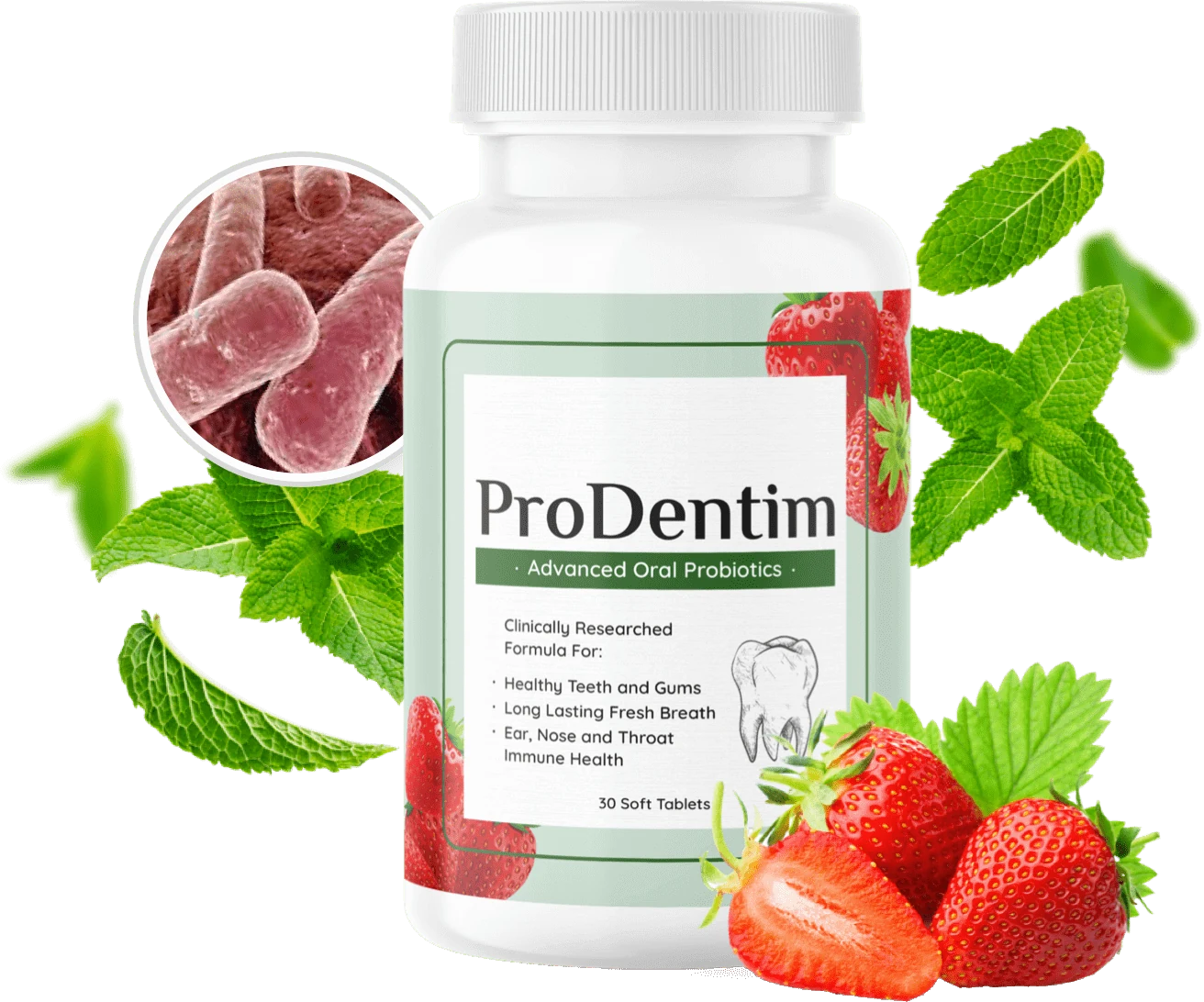
ProDentim is built on a premise that has genuinely shifted in dental research over the past decade: the mouth is an ecosystem, and health comes from cultivating the right bacteria, not sterilizing everything. Its formula reflects that in a specific way — instead of a long list of herbal extracts, you get four live-culture entries and a short supporting cast chosen to help them survive and work.
Below is every ingredient, what it is, why it's there, and — just as important — how strong the evidence behind it actually is. One ground rule for the whole page: research on an ingredient is not proof that ProDentim works. Studies test specific strains at specific doses in specific formats; this product hasn't had its own trial. We'll keep flagging where that boundary sits.
Lactobacillus paracasei — the gum-health candidate
Lactobacillus paracasei (recently reclassified by some references as Lacticaseibacillus paracasei) is a lactic-acid bacterium used in fermented foods and increasingly in oral-care research. In the ProDentim blend it carries the vendor's gum-health positioning, along with a sinus-comfort claim that's harder to trace to specific research.
What the literature shows: studies of oral paracasei strains have looked at plaque, gum inflammation and bad breath, with some positive findings — particularly for reducing markers of gum inflammation — though studies vary in strain, dose and quality, and results aren't uniformly favorable. It's a reasonable inclusion with real (if uneven) science behind it, listed first on the label, which usually signals it's the largest component of the blend.
Lactobacillus reuteri — the best-evidenced strain in the mix
If ProDentim has a scientific anchor, it's L. reuteri. This species — naturally found in some human mouths and in dairy fermentation — has the strongest oral-health record in published research, including randomized trials using reuteri-containing lozenges in people with gum inflammation. The pattern in that research: modest but measurable reductions in gum bleeding and plaque when the probiotic is added to mechanical cleaning1.
The honest caveats: effects in trials shrink or reverse after people stop taking the probiotic; the studies used specific commercial strains at specific doses that ProDentim doesn't disclose; and gum-disease outcomes in high-risk patients still need professional care. But between the three CFU strains, this is the one whose inclusion we'd defend from the literature.
Bifidobacterium lactis BL-04 — the balance strain
BL-04 is a trademarked strain of Bifidobacterium lactis, a species better known for gut research than oral research. Its inclusion here reflects the mouth–gut connection: probiotics swallowed or chewed pass through both ecosystems, and B. lactis is among the best-characterized species for general microbiome support.
Specific oral-health evidence for BL-04 itself is thinner — some studies on bacterial balance and immune markers, nothing we'd call decisive. Think of it as a credible generalist rather than a dental specialist. It's also the only strain in the blend identified with its full trademark code, which at least lets you verify it exists as a documented, commercial strain.
Streptococcus salivarius — the BLIS K-12 / M-18 species
The label's fourth bacterial entry, listed at 20 mg, is Streptococcus salivarius — the species behind the BLIS K-12 and BLIS M-18 strains that ProDentim's marketing names. This is the oral-probiotic world's most interesting organism: a beneficial bacterium that naturally colonizes healthy tongues and produces bacteriocin-like substances (that's the “BLIS”) that inhibit odor-causing and pathogenic bacteria.
K-12 in particular has human research behind it for bad breath and throat health — chewing lozenges containing it has reduced volatile sulfur compounds (the chemistry behind halitosis) in several trials. M-18 has been studied for dental purposes. Both strains are commercial products with a real research footprint. Whether the S. salivarius in ProDentim is precisely K-12/M-18 or related strains isn't itemized on the label — a transparency gap, though the species choice itself is well supported.
Inulin — the fuel that keeps the strains working
Inulin is a prebiotic fiber from chicory root, listed plainly at 100 mg. Its job isn't to act on your teeth directly; it's food for the probiotic strains, helping them persist once introduced. This is a formulator's detail we respect — pairing probiotics with their preferred substrate is how the category has evolved.
Inulin is one of the best-studied dietary fibers overall2, generally well tolerated at this modest dose, and (unlike several formula components) fully disclosed in quantity. People with IBS or fructan sensitivity sometimes react to inulin with gas or bloating — the main practical consideration.
Malic acid, calcium phosphate & peppermint — the supporting cast
Three more ingredients round out the blend, and they play very different roles:
| Ingredient | Role in the blend | Evidence reality-check |
|---|---|---|
| Malic acid | Fruit-derived acid; vendor cites tooth-whiteness maintenance and saliva support | Malic acid occurs naturally in apples and strawberries; some OTC products use it for dry mouth. Direct whitening evidence at supplement doses: minimal. Its acidity is mild and the dose undisclosed. |
| Calcium phosphate | Mineral source; vendor cites tooth and enamel support | Calcium and phosphate are literally enamel's building blocks, and calcium-phosphate pastes have remineralization research{r(3)} — mostly in toothpaste applied directly to teeth, not chewed supplements. Sensible inclusion; delivery format matters. |
| Peppermint | Flavor and breath freshness | Real antimicrobial and sensory-freshness properties, mostly studied as peppermint oil. Here it's primarily why the tablet tastes pleasant enough to chew daily. |
The whole formula, rated by evidence strength
| Ingredient | Evidence for its oral-health role | Our one-line read |
|---|---|---|
| L. reuteri | Moderate — multiple human trials, mostly positive | The formula's best-justified strain |
| S. salivarius (K-12/M-18) | Moderate — bad-breath and throat trials | Strong choice; strain identity not itemized |
| L. paracasei | Limited-to-mixed — small studies | Plausible, not proven |
| B. lactis BL-04 | Limited for oral use — stronger for gut | Generalist addition |
| Inulin | Strong as a prebiotic fiber generally | Supports the concept; 100 mg disclosed |
| Calcium phosphate | Real remineralization science, different format | Logical, delivery-format caveat |
| Malic acid | Weak for whitening at these doses | More marketing than mechanism |
| Peppermint | Traditional freshness use | Flavor and comfort |
Reading the table as a whole: the live-culture core is better chosen than most competitors', the supporting blend is sensible if under-disclosed, and nothing here is junk filler. What's missing is equally clear — no per-strain counts, no disclosed blend amounts, and no trial of the product itself1.
Check ProDentim’s Current PriceOfficial store · 60-day guarantee
Ingredient questions
Does ProDentim contain sugar or artificial sweeteners?
Is ProDentim vegan or vegetarian?
Is ProDentim gluten-free and non-GMO?
Can I get these probiotics from food instead?
Why hide the exact amounts in a proprietary blend?
References
- PubMed — research on Lactobacillus reuteri and other oral probiotics in gum health. pubmed.ncbi.nlm.nih.gov/?term=Lactobacillus+reuteri+gingivitis+probiotic
- NIH Office of Dietary Supplements — dietary fiber fact sheet (inulin context). ods.od.nih.gov/factsheets/DietaryFiber-Consumer
- NIH ODS — calcium fact sheet (calcium-phosphate and enamel context). ods.od.nih.gov/factsheets/Calcium-Consumer